

On this page
What is GERD?
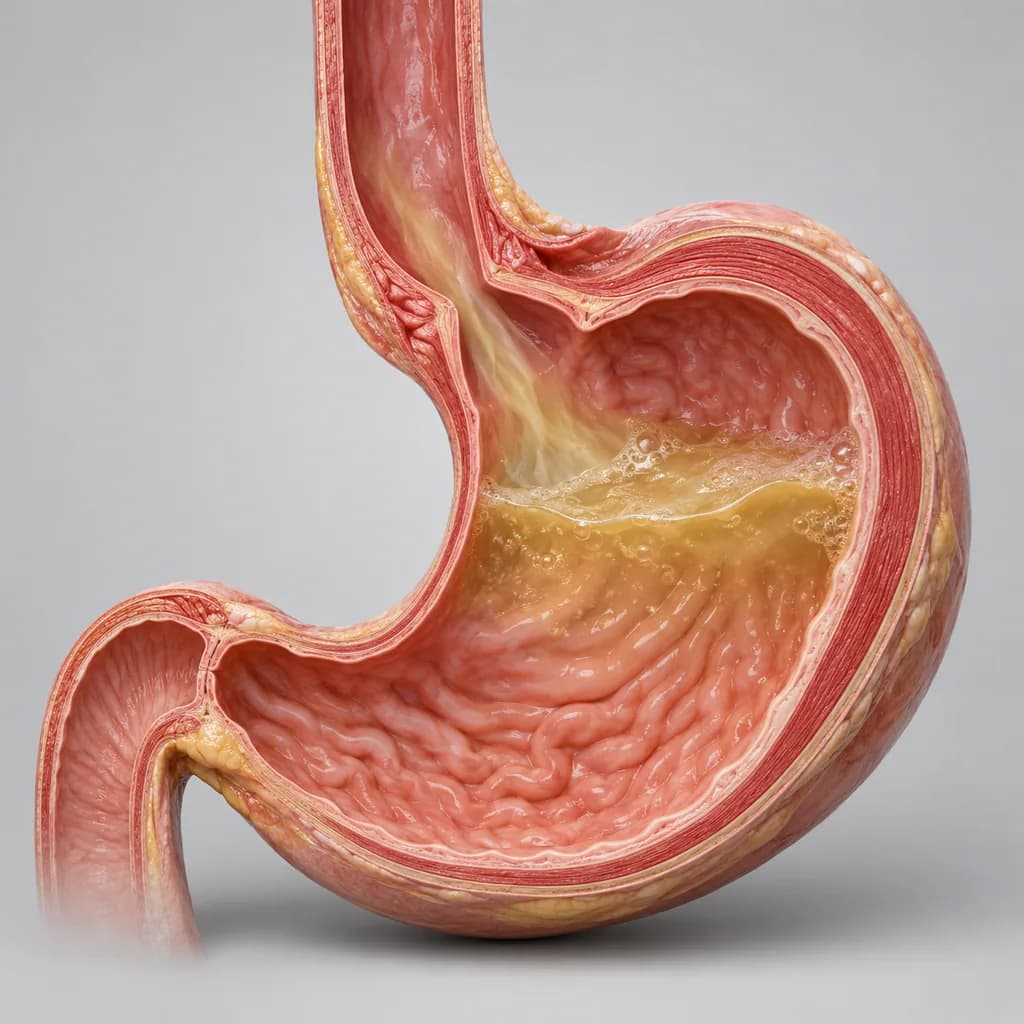
GERD (gastroesophageal reflux disease) is a condition in which the muscular valve between the esophagus and the stomach does not close properly, so stomach acid washes back up and irritates the lining of the esophagus, causing heartburn and regurgitation. Occasional heartburn is not GERD; GERD is reflux that is frequent, persistent or causing damage. Extra weight pressing on the abdomen, a hiatal hernia, pregnancy, smoking and large late meals all make that valve more likely to let acid through. Certain medications relax the valve or irritate the esophagus as well, and GLP-1 medications used for weight loss and diabetes, such as semaglutide, have also been linked to reflux symptoms since they slow how quickly the stomach empties. Most reflux is a nuisance rather than a danger, but over years it can inflame the esophagus, narrow it so difficulty swallowing develops, or change its lining into Barrett's esophagus, which carries a small increased risk of esophageal cancer. Dr. Ihab Herraka evaluates GERD and the upper GI conditions it is often mistaken for at our Main Clinic in Fort Smith.
Symptoms
GERD usually shows up as heartburn, a sour or bitter taste, regurgitation and chest discomfort after meals:
- Burning behind the breastbone after eating, when bending over, or when lying down
- A lump-in-the-throat feeling, throat clearing, hoarseness, or a cough that is worse at night
- Symptoms that wake you at night or that you manage with antacids several times a week
- Wearing down of the teeth, or asthma-like wheezing or shortness of breath that has no other clear cause Symptoms more than twice a week, an over-the-counter medicine that no longer controls them, or more than eight weeks on a daily acid reducer without a diagnosis, are worth an evaluation. See a doctor promptly if you have:
- Food sticking on the way down, or pain with swallowing
- Unintentional weight loss
- Repeated vomiting, vomiting blood or material that looks like coffee grounds, or black, tarry stools
- Low iron or anemia on bloodwork
- Chest pain with exertion, shortness of breath, sweating, or pain spreading to the arm or jaw: treat that as a possible heart problem and call 911
How GERD is diagnosed
For many patients the diagnosis is made in the exam room: typical heartburn and regurgitation that improve on acid-reducing medication are usually enough. Testing matters when symptoms do not fit that pattern. At the Main Clinic that means:
- A careful history, including every medication and supplement you take, since some relax the valve or irritate the esophagus.
- Upper endoscopy. A short, sedated exam in which a thin scope looks directly at the esophagus and stomach, with painless biopsies if needed. Dr. Herraka recommends it for any red-flag symptom above, for reflux that has not responded to treatment, and for long-standing frequent reflux, since that is how Barrett's esophagus is found. It is done at our on-site endoscopy center.
- Further testing when the answer is unclear. If your endoscopy looks normal but symptoms continue, Dr. Herraka may recommend acid (pH) monitoring, or manometry, which measures how the esophagus moves.
Treatment
Treatment starts with the least invasive options and steps up only if needed. Changes that take pressure off the valve. Smaller meals, not lying down for about three hours after eating, raising the head of the bed, and limiting alcohol and tobacco. Trigger foods vary from person to person, so learn your own rather than cutting out everything. Over-the-counter relief. Antacids neutralize acid for quick, short-lived relief. H2 blockers reduce acid production for several hours and suit predictable, occasional symptoms. Proton pump inhibitors (PPIs). These are the most effective medicines for GERD and for healing an irritated esophagus. Take them 30 to 60 minutes before breakfast. An initial course is typically about eight weeks; long term, the goal is the lowest dose that works, with periodic review rather than open-ended refills. Is it safe to take a PPI long-term? For most patients, yes, when the medication is treating a real diagnosis and is reviewed periodically. Some studies have raised concerns linking long-term PPI use to lower bone density, vitamin B12 deficiency and kidney problems, but the evidence for most of these links is inconsistent and the risk for an individual patient is generally small compared with the risk of leaving significant reflux untreated. Rather than stopping a needed medication out of concern over these reports, the better approach is periodic review with your physician to confirm the lowest effective dose and check for these issues if you are on a PPI long term. Weight loss. Extra weight around the abdomen pushes acid upward, and losing it is one of the most reliable non-drug ways to reduce reflux. Because Dr. Herraka is board-certified in obesity medicine, medical weight loss can be part of your reflux plan. Procedures for reflux medicine cannot control. Some patients keep refluxing despite treatment, or prefer not to take medication for decades. Surgical options such as fundoplication, which wraps part of the stomach around the valve to reinforce it, and the LINX device, a ring of magnetic beads placed around the valve, along with certain endoscopic procedures, are options; Dr. Herraka will tell you whether you are a candidate and coordinate any surgical referral.
What to expect at your visit
Your first appointment is a conversation and an exam, not a procedure. Bring a list of every medication and supplement you take, including over-the-counter acid reducers. You leave with a plan: changes to try, a medication and how to take it, and a follow-up date. If an upper endoscopy is needed, it is scheduled at our own center. For most plans, no referral is needed.
Cost & insurance
Office visits and endoscopy for reflux symptoms are covered by most plans when medically indicated; your copay, deductible and coinsurance depend on your policy. We accept most major plans, including Medicare and both Arkansas and Oklahoma Medicaid, the full list is on our insurance page. Our staff verifies your benefits before your visit.
Frequently asked questions
How do I know if my heartburn is GERD?
Occasional heartburn after a large or late meal is normal. It is more likely to be GERD when it happens more than twice a week, keeps coming back over months, wakes you at night, or comes with regurgitation or trouble swallowing. Relying on antacids every week is worth an evaluation.
When should I see a gastroenterologist for acid reflux?
See a gastroenterologist if heartburn happens more than twice a week, an over-the-counter medicine no longer controls it, you have been on a daily acid reducer for more than eight weeks without a diagnosis, or you have a red-flag symptom such as trouble swallowing, unintentional weight loss, or vomiting blood or black stools.
How is GERD diagnosed?
Typical heartburn and regurgitation that improve on acid-reducing medication are often enough for a diagnosis without testing. When symptoms do not fit that pattern, do not respond to treatment, or come with a red-flag symptom, an upper endoscopy looks directly at the esophagus and stomach, and further testing such as acid monitoring or manometry is used when the endoscopy is normal but symptoms continue.
Does GERD go away on its own?
Occasional, mild reflux tied to a specific meal or habit often settles once that trigger is addressed. True GERD, driven by a valve that does not close well, usually needs ongoing management, whether that is lasting lifestyle changes, medication, or, for some patients, a procedure. It rarely resolves permanently on its own without some form of treatment.
I take an over-the-counter acid reducer every day. Is that a problem?
It is a signal worth acting on. These medicines work, but taking one daily for months without a diagnosis can hide a condition that needs to be identified, such as an ulcer, a narrowed esophagus or Barrett's esophagus. Come in so we can find what is driving the reflux.
Can acid reflux cause a cough, hoarseness or a sore throat?
Yes. Acid that reaches the throat and voice box can cause a chronic cough, hoarseness, frequent throat clearing or a sore throat that is worse in the morning, sometimes without any heartburn at all. Other conditions cause the same symptoms, so reflux is treated as one possibility rather than the answer.
How do I know if my heartburn is actually my heart?
You often cannot tell from symptoms alone, which is why chest pain deserves caution. Pain with exertion, shortness of breath, sweating, or pain spreading to the arm or jaw should be treated as a possible heart problem. Call 911. Once your heart has been cleared, we can look at digestive causes.
Will I have to take reflux medicine for the rest of my life?
Not necessarily. Many patients control GERD with a course of medication plus lasting changes to meals, weight and sleep position, then step down to an as-needed dose or stop. Others, particularly those with esophageal damage or Barrett's esophagus, do need ongoing acid control. We review that decision at follow-up.
See a heartburn specialist in Fort Smith, AR
Frequent heartburn has a cause. Call our Main Clinic at (479) 242-2888 or request an appointment online to see Dr. Ihab Herraka at 3416 Old Greenwood Rd, Fort Smith, AR 72903, Monday through Friday, 8:00 to 5:00. We care for patients from Fort Smith, Van Buren, Greenwood, Alma, Barling, Charleston and Ozark, and from Poteau and Sallisaw in eastern Oklahoma; Oklahoma Medicaid is accepted and no referral is needed for most plans.