

On this page
What are colon polyps?
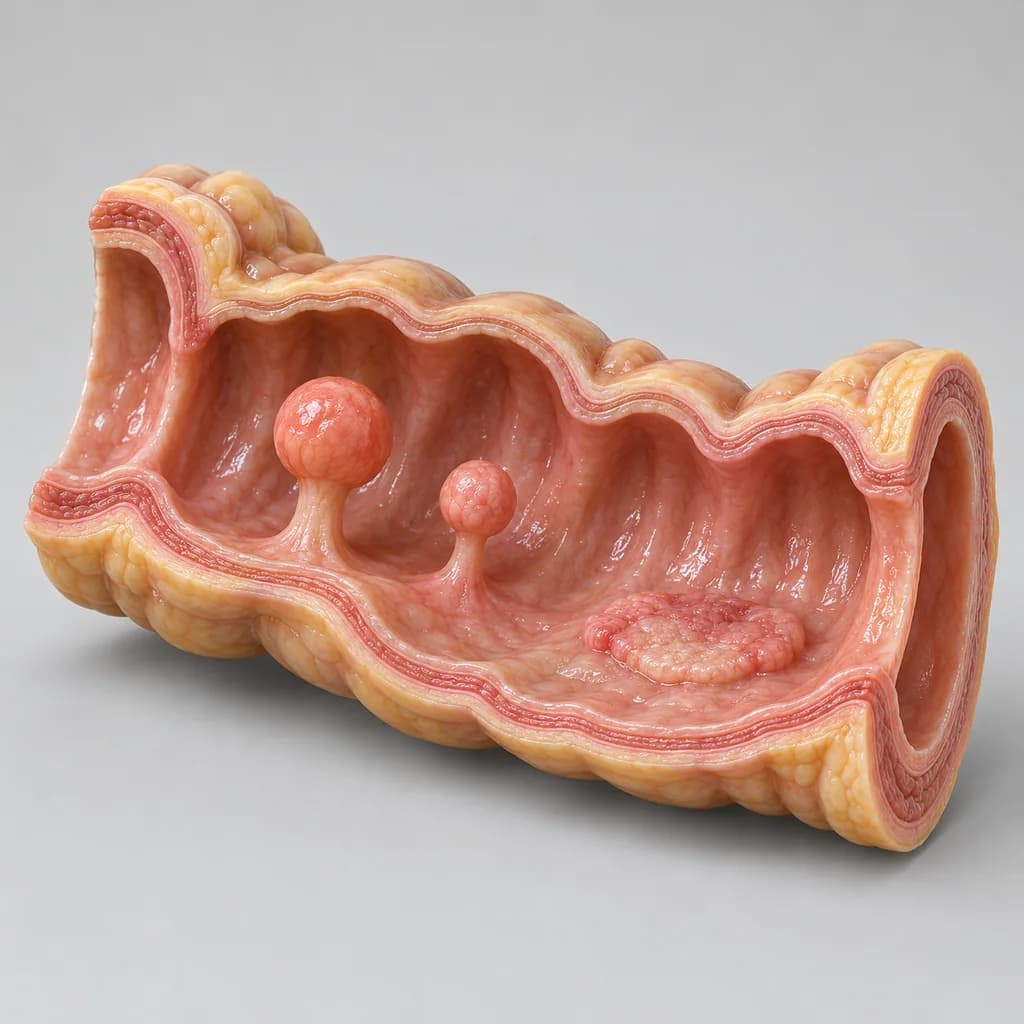
A colon polyp is a small growth on the inner lining of the colon or rectum. Most polyps are not cancer, but most colorectal cancers begin as one, which is why a polyp is taken out once it is found. Dr. Ihab Herraka finds and removes them at our Fort Smith Main Clinic. Polyps grow slowly, usually over many years, and most never become cancer. That slow pace is what leaves a long window in which a polyp can be found and taken out. For who should be checked and at what age, see colon cancer screening. The type matters more than the fact that a polyp was found, and only a pathologist can tell them apart:
- Adenomas. The most common precancerous type. Most never turn into cancer, but they can change over time.
- Sessile serrated lesions. Also precancerous, and often flat and pale rather than raised, which makes them harder to see, one reason a thorough bowel prep matters.
- Hyperplastic polyps. Common, usually small, usually in the rectum and lower colon. Small ones are generally considered harmless. Size and number count too: a larger polyp, or several at one exam, carries more weight than one small one. Shape matters as well. A pedunculated polyp sits on a stalk, like a mushroom, and is often easier to remove in one piece, while a sessile polyp lies flat against the bowel wall. Size drives management more than any single factor: once a polyp is larger than 1 centimeter, the chance it contains higher-risk changes goes up, which is why size is recorded at every colonoscopy. Family history matters too. A first-degree relative with colon polyps or colorectal cancer raises your own risk and may move your recommended screening age earlier. A smaller number of families carry an inherited condition, such as Lynch syndrome or familial adenomatous polyposis (FAP), that causes polyps to form at a younger age and in larger numbers. If colorectal cancer or polyps run through multiple generations, or appeared before age 50, tell us so we can discuss earlier or more frequent screening for you and your relatives.
Polyp vs. hemorrhoid
A colon polyp and a hemorrhoid are not related, but both can cause rectal bleeding, which is why the two get confused. Hemorrhoids are swollen blood vessels near the anus, low enough that they can sometimes be felt; a colon polyp sits higher up, inside the colon or rectum, and cannot be seen or felt without a scope. Bleeding alone cannot tell them apart, so new or unexplained rectal bleeding is evaluated rather than assumed to be hemorrhoids.
Symptoms
Most colon polyps cause no symptoms at all. That is the whole problem with them: by the time a polyp announces itself, it is usually large, and sometimes already a cancer. When symptoms do occur, they can include:
- Rectal bleeding, blood on the paper, in the bowl, or in the stool
- A change in bowel habits lasting more than a few weeks: new constipation, new diarrhea, or narrower stools
- Persistent cramping, gas or abdominal discomfort
- Fatigue or anemia on bloodwork, from slow bleeding you never see
- Unexplained weight loss See a doctor promptly for rectal bleeding at any age, black or tarry stools, a lasting change in bowel habits, anemia, or unexplained weight loss. Do not assume bleeding is hemorrhoids. See a rectal bleeding doctor Fort Smith promptly. Seek emergency care for heavy or continuous bleeding.
How colon polyps are diagnosed
Polyps are found by looking. Your visit begins with your history, symptoms, family history of colorectal cancer or polyps, prior colonoscopy results, and an exam.
- Colonoscopy. The test that both finds a polyp and removes it in the same visit. Dr. Herraka performs it in our on-site endoscopy center; see our colonoscopy page.
- Stool testing. A FIT or stool DNA test can signal that something is bleeding or shedding abnormal cells, but it cannot remove a polyp, so an abnormal result is followed by a colonoscopy.
- Pathology. Every polyp removed goes to the lab. Type, size and whether it came out completely set your follow-up interval.
Treatment
Treatment for a polyp is removal, and it almost always happens during the colonoscopy that found it. You are sedated for the exam, and the removal itself is not felt. Colon polyp removal is matched to the polyp:
- Cold snare or forceps removal. Small polyps are lifted off with a thin wire loop or taken with a biopsy instrument, in seconds.
- Snare polypectomy. Larger polyps on a stalk are removed with a wire snare, sometimes using an electrical current to seal the base and small clips to close the site.
- Endoscopic mucosal resection. Flat or larger lesions are lifted off the bowel wall with an injection of fluid underneath, then removed in pieces.
- Referral for surgery. Uncommon, and reserved for a polyp too large or awkwardly placed to remove safely through the scope, or one that turns out to contain cancer. Bleeding can occur several days later, so call our office for significant rectal bleeding, severe abdominal pain or fever in the week after a removal. New polyps can form, so your pathology results decide when you come back. As a general guide:
- Normal exam, average risk: 10 years
- 1-2 small tubular adenomas: 7-10 years
- 3-4 tubular adenomas: 3-5 years
- 5 or more adenomas, or an adenoma 1 cm or larger, or with higher-risk features: 3 years
- Large or numerous sessile serrated lesions: 1-3 years, set individually These intervals are a general guide from national screening guidelines. Dr. Herraka sets your actual interval based on your pathology report, your family history and how completely the prep allowed the colon to be seen. Not smoking, limiting alcohol and processed meat, staying active and keeping a healthy weight lower your risk of new ones.
What to expect at your visit
Your first appointment is mostly conversation: your symptoms, your bowel pattern, your family history, and your medicines, including blood thinners and aspirin, which affect how a polyp removal is planned. Bring any prior colonoscopy and pathology reports. If a colonoscopy is the next step, we schedule it, give you written prep instructions, and check your coverage first. For most plans, no referral is needed.
When polyps run in the family
Most polyps are sporadic, meaning they are not inherited. A minority are not. If colorectal cancer or advanced polyps appear repeatedly in your family, or if you or a close relative were diagnosed young, an inherited syndrome such as Lynch syndrome or familial adenomatous polyposis is worth ruling out, because it changes how early and how often you should be scoped, and it matters for your children and siblings too. The testing is simpler than most people expect: a cheek swab taken here in the office, sent to a laboratory, with results in a few weeks. Ask Dr. Herraka whether your family history warrants it.
Cost & insurance
If a polyp is removed during a colonoscopy that began as a screening, some plans process part of the claim as diagnostic rather than preventive, which can change what you owe. Our billing team explains that before your procedure. We accept most major plans, including Medicare and both Arkansas and Oklahoma Medicaid, and the full list is on our insurance page.
Frequently asked questions
Does having a colon polyp mean I have cancer?
No. Most polyps are not cancer, and most would never have become one. They are removed because there is no reliable way to tell by looking which ones would, and because taking one out adds seconds to an exam you are already having.
Is colon polyp removal painful?
No. The lining of the colon does not sense cutting the way your skin does, so the removal itself is not felt, and you are sedated for the colonoscopy in any case. Afterward you may have gas and cramping from the air used during the exam, which passes quickly.
Will I need surgery if a polyp is found?
Almost certainly not. Nearly all polyps are removed through the scope during the colonoscopy that finds them, and you go home the same day. Surgery is reserved for a polyp too large or awkwardly placed to take out safely, or one that contains cancer.
How will the discovery of colon polyps impact my follow-up screening schedule?
The polyp that was removed is gone for good, but people who form polyps once tend to form them again, so follow-up is scheduled rather than left to chance. Your interval depends on how many polyps were found, how large they were, and what type, and can range from three to ten years. See the surveillance table above for the general pattern.
Can I do anything to prevent colon polyps?
Some things help. Not smoking, limiting alcohol and processed and red meat, staying active, keeping a healthy weight, and eating more fiber, fruit and vegetables all lower your risk. None of it replaces screening, though, because polyps form in healthy people too.
See a colon polyp specialist in Fort Smith
Call the Digestive & Liver Center of Arkansas Main Clinic at (479) 242-2888 or request an appointment to see Dr. Ihab Herraka at 3416 Old Greenwood Rd, Fort Smith, AR 72903, Monday through Friday, 8:00 to 5:00. We care for patients from Fort Smith, Van Buren, Greenwood, Alma, Barling, Charleston and Ozark, and from Poteau, Sallisaw and eastern Oklahoma, where Oklahoma Medicaid is accepted. More on our lower GI conditions page.