

On this page
What is celiac disease?
Celiac disease is an autoimmune condition in which gluten, a protein in wheat, barley and rye, triggers the immune system to damage the lining of the small intestine, so nutrients are poorly absorbed. It affects roughly 1 in 100 people, and many of them are never diagnosed. Celiac disease testing in Fort Smith starts with a blood test and is confirmed with a biopsy taken during upper endoscopy. One thing to know before anything else: do not start a gluten-free diet until you have been tested. Both the blood test and the biopsy depend on gluten being in your diet, and cutting it out first can make a true case look normal. Get tested first, then change your diet based on the answer. Celiac disease is not the same as non-celiac gluten sensitivity, and neither one is a wheat allergy. In celiac disease the immune system damages the intestinal lining, and that damage shows up on testing; in gluten sensitivity, gluten brings on bloating and fatigue, but antibody tests and biopsies come back normal. You cannot tell the two apart at home, and they are managed differently.
Symptoms
Celiac disease looks different from person to person. Some have clear digestive symptoms; others are found only because a lab result was off.
- Diarrhea, gas, bloating or abdominal cramping
- Weight loss, or poor growth in children
- Fatigue, and iron-deficiency anemia that does not improve with iron
- Mouth ulcers, or an itchy blistering rash on the elbows and knees
- Low bone density, or bone and joint pain
- Numbness or tingling in the hands and feet, or unexplained infertility
- Constipation, and in some people, no digestive symptoms at all See a doctor promptly if you have blood in your stool or black, tarry stools, unexplained weight loss, or severe abdominal pain. Those are not typical of celiac disease and need evaluation on their own.
Who should be tested
Testing is recommended for anyone with digestive symptoms that fit the pattern above, and also for people without digestive symptoms who fall into a higher-risk group:
- First-degree relatives (parents, siblings, children) of someone with celiac disease
- People with type 1 diabetes or autoimmune thyroid disease
- Unexplained iron-deficiency anemia or osteoporosis
- Persistent IBS-like symptoms that have not been fully explained
- Down syndrome or Turner syndrome, both of which carry a higher celiac risk
How celiac disease is diagnosed
Testing is a sequence, and it only works if you are still eating gluten when it starts. A mail-order gluten intolerance test is not a substitute. At the Main Clinic that usually means:
- Blood testing first. A celiac antibody panel, most often tissue transglutaminase IgA (tTG-IgA) measured with a total IgA level, because low total IgA can make the main test read falsely negative. When total IgA is low, tTG-IgG or deamidated gliadin peptide (DGP-IgG) is used instead; endomysial antibody (EMA) testing is sometimes added to confirm an unclear result.
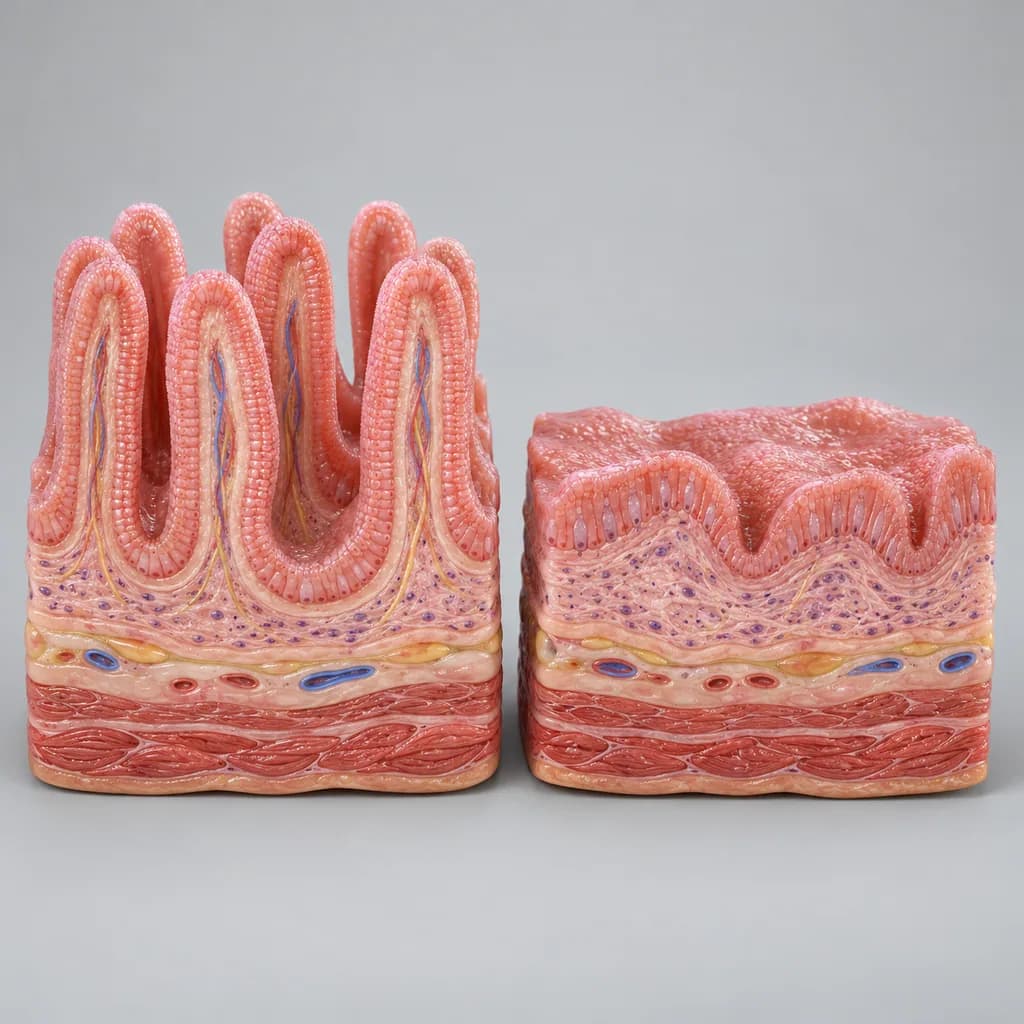
- Upper endoscopy with small-bowel biopsies. In adults, biopsy confirms the diagnosis. Dr. Herraka takes several small tissue samples from the first part of the small intestine during an upper endoscopy in our on-site endoscopy center, while you are sedated. The biopsy is graded by how much the intestinal villi, the small finger-like projections that absorb nutrients, have flattened, a scale known as the Marsh classification.
- Ruling out the mimics. Lactose intolerance testing, irritable bowel syndrome and other causes of chronic diarrhea look similar. Related stomach and small-bowel problems are covered on our upper GI conditions page.
- Checking for deficiencies. After a diagnosis we test iron, vitamin B12, folate and vitamin D, and consider a bone density scan. This is where a mail-order gluten intolerance test falls short. Home kits can measure the same antibodies, but a number on a screen is not a diagnosis. It has to be read alongside your symptoms, your IgA level and your diet, then confirmed by biopsy. And there is no blood test for gluten sensitivity: it is identified by ruling celiac disease out first.
Treatment
The treatment is a strict, lifelong gluten-free diet. No medication lets you eat gluten safely, and small, repeated amounts keep the intestine inflamed.
- Learn the diet properly. Wheat, barley and rye come out; naturally gluten-free foods, including meat, fish, eggs, fruit, vegetables, beans, rice, corn and potatoes, stay in. We connect patients with a registered dietitian, because label reading and avoiding cross-contact are learned skills.
- Replace what you are missing. Iron, vitamin D, calcium, folate and B12 are corrected and rechecked.
- Follow up on purpose. Antibody levels are repeated over the following months to confirm the diet is working. Symptoms usually improve well before the lining heals.
- Sort out symptoms that persist. Most often gluten is still getting in from an unexpected source. If the diet is genuinely clean, we look for a second diagnosis.
- Test the family. Celiac disease runs in families. Parents, siblings and children should be tested even without symptoms.
What to expect at your visit
Your first appointment is a conversation about your symptoms, your family history, and your medications and supplements. Bring any prior lab work, and keep eating gluten until Dr. Herraka tells you otherwise. Bloodwork is usually drawn the same day, and if your results point to celiac disease we schedule the endoscopy at our own center. For most plans, no referral is needed.
Cost & insurance
Office visits, celiac blood testing and endoscopy with biopsy are covered by most plans when medically indicated. We accept most major plans, including Medicare and both Arkansas and Oklahoma Medicaid, the full list is on our insurance page. Our staff verifies your benefits beforehand and tells you if a referral or prior authorization is required. A blood-only celiac panel through a direct-to-consumer lab typically costs less out of pocket than insurance-billed testing, but it does not include the biopsy that confirms the diagnosis, and results still need a physician to interpret them.
Frequently asked questions
Should I go gluten-free before being tested for celiac disease?
No. Both the blood tests and the biopsies depend on gluten being in your diet. Going gluten-free first can make a true case of celiac disease look negative, and you can be left without an answer for years. Keep eating normally and get tested first.
What is the difference between celiac disease and gluten intolerance?
Celiac disease is autoimmune: gluten triggers the immune system to damage the small intestine, and that damage shows on antibody testing and biopsy. Gluten sensitivity causes symptoms without that damage and with normal tests. Only celiac disease carries risks such as anemia and bone loss, and only it requires strict lifelong avoidance.
Can a home gluten intolerance test tell me if I have celiac disease?
Not on its own. A home kit may measure the same antibodies we do, but the result still has to be read in context. Your total IgA level, your symptoms, and whether you were eating gluten all change what it means, and a positive result still has to be confirmed by biopsy.
I already stopped eating gluten. Can I still be tested?
Yes, but it takes an extra step. Testing on a gluten-free diet is unreliable, so the options are a gluten challenge, eating gluten again for several weeks, commonly six to eight, before retesting, or genetic testing (HLA-DQ2/DQ8), which is most useful for its negative result: without those genes, celiac disease is very unlikely.
Who should be tested for celiac disease?
Anyone with digestive symptoms that fit the pattern above should be tested, along with people who have no digestive symptoms but fall into a higher-risk group: first-degree relatives of someone with celiac disease, people with type 1 diabetes or autoimmune thyroid disease, and anyone with unexplained iron-deficiency anemia or osteoporosis.
How accurate is celiac blood testing?
The main antibody test (tTG-IgA) is accurate in most people, but it depends on your total IgA level being normal and on your still eating gluten at the time of the test. A negative result in someone who is low in total IgA, or who has already cut out gluten, can be falsely reassuring, which is why the panel and the timing both matter.
Can I get a celiac disease panel without insurance?
Yes. Self-pay pricing is available for the blood panel, and we can discuss options if you are uninsured or have a high-deductible plan. A biopsy is still needed to confirm the diagnosis if the blood test is positive.
Should the rest of my family be tested?
Yes. Celiac disease runs in families, so parents, siblings and children of someone diagnosed are at higher risk and should be tested even if they feel fine. Testing is also recommended for people with type 1 diabetes or autoimmune thyroid disease. It starts with the same simple blood test.
See a celiac doctor in Fort Smith, Arkansas
If gluten seems to be making you sick, get an answer before changing your diet. Call the Digestive & Liver Center of Arkansas Main Clinic at (479) 242-2888 or request an appointment to see Dr. Ihab Herraka at 3416 Old Greenwood Rd, Fort Smith, AR 72903, Monday through Friday, 8:00 to 5:00. We care for patients across the River Valley and eastern Oklahoma, where Oklahoma Medicaid is accepted.