

On this page
- What is CRH O'Regan hemorrhoid banding?
- How rubber band ligation works
- Why the CRH O'Regan System is gentler than traditional banding
- Who can be treated with banding
- Your visit, step by step
- What you feel during and after
- Aftercare: your first week
- Why about three visits are typical
- How well does banding work?
- Risks and complications, and how rare they are
- Cost & insurance
- Frequently asked questions
- Schedule your banding consultation in Fort Smith
CRH O'Regan banding places a small rubber band at the base of an internal hemorrhoid so it shrinks and falls away on its own. It takes about a minute in our Fort Smith office, with no incisions, no needles and no anesthesia, and most people return to their day straight afterwards.
What is CRH O'Regan hemorrhoid banding?
CRH O'Regan banding is a one-minute, in-office procedure that places a tiny rubber band at the base of an internal hemorrhoid so it shrinks and falls away on its own. There are no incisions, no needles, no anesthesia, and for most patients, no recovery time. It is a refined form of rubber band ligation, the treatment gastroenterologists most often recommend for internal hemorrhoids that bleed or prolapse. Dr. Ihab Herraka has performed in-office banding at Digestive & Liver Center of Arkansas since 2020, treating patients from across Fort Smith and the River Valley. Unlike creams and suppositories, which only calm symptoms for a while, banding removes the hemorrhoid itself. And unlike surgery, it does not require fasting, sedation, an operating room, or days of painful recovery.
How rubber band ligation works
A hemorrhoid is a cushion of swollen blood vessels. Banding works by cutting off the small blood supply that keeps that cushion swollen. A soft, medical-grade band about the size of a small rubber band is placed around the base of the internal hemorrhoid. Within a few days the banded tissue shrinks, dies back, and separates, taking the band with it. It passes during a bowel movement, and most people never notice it happen. Just as importantly, the small scar that forms where the band was placed tacks the tissue back up where it belongs. That is what stops prolapse, the tissue that pushes out through the anal opening, from coming back.
Why the CRH O'Regan System is gentler than traditional banding
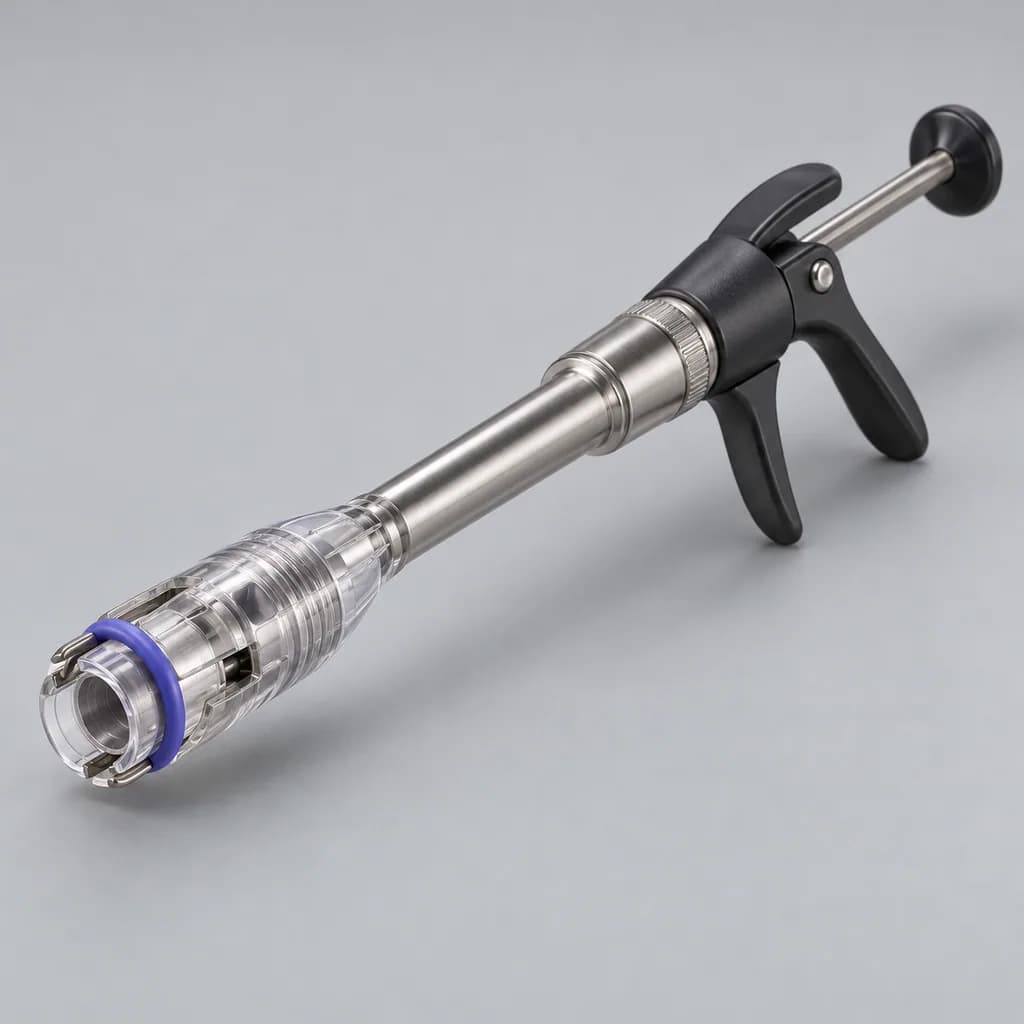
Traditional banding uses a metal clamp or grasping forceps to pull the hemorrhoid into the ligator. That approach works, but it grabs a larger amount of tissue, requires an assistant, and has historically been associated with more discomfort and more bleeding. The CRH O'Regan System uses a small, single-use ligator that draws the tissue in with gentle suction instead. Three things follow from that:
- Less tissue is banded. The band captures a smaller, more precise amount of tissue, which is a large part of why patients report so little discomfort.
- Placement is higher and safer. The band sits well above the dentate line, the border where pain-sensing nerves begin. Tissue above that line has very few pain fibers, which is why the procedure is generally painless.
- No clamping, no sedation, one clinician. Dr. Herraka performs the procedure himself in under a minute, with nothing sharp involved. Because of this design, the manufacturer of the CRH O'Regan System reports it is suitable for more than 95% of people with hemorrhoids, meaning fewer than 1 in 20 patients ever need surgery.
Who can be treated with banding
Banding treats internal hemorrhoids, the ones that form inside the rectum and cause bright red bleeding, prolapse, itching, and mucus. It works well for grade 1, grade 2, and many grade 3 internal hemorrhoids. Banding is not used on external hemorrhoids, which sit below the dentate line under skin full of nerve endings. Those are managed differently, with fiber, topical care, warm sitz baths, and occasionally a minor procedure if a painful clot forms. Many patients have both kinds, and Dr. Herraka will tell you exactly what you are dealing with after your exam. Our page on hemorrhoid symptoms and grades explains the differences in plain language. Tell us in advance if any of the following apply, because they affect timing or approach: you take a blood thinner or antiplatelet medication, you have an active fissure or infection, you have inflammatory bowel disease involving the rectum, your immune system is suppressed, or you are pregnant. Hemorrhoids that develop in pregnancy often improve on their own after delivery, so treatment is usually deferred.
Your visit, step by step
1. Consultation and exam. You will describe your symptoms and Dr. Herraka will perform a focused anorectal exam, usually including anoscopy, a brief look inside the anal canal with a small, smooth scope. This is how he confirms the hemorrhoids are the source of your symptoms and grades how far they have progressed. 2. Positioning. You lie on your side, draped, with your knees drawn up. Nothing about this requires you to change into a gown for surgery or fast beforehand. 3. Placing the band. The disposable ligator is passed through the anoscope. Gentle suction draws a small amount of tissue at the base of the hemorrhoid into the ligator, and the band is released around it. Start to finish, this takes less than 60 seconds. 4. Getting up and going home. You get dressed and go. There is no recovery room, no driver required, and no sedation to sleep off. Most patients return to work the same day. 5. Follow-up. You will be scheduled to return for your remaining hemorrhoid columns, typically a couple of weeks apart. Many patients are able to have their first band placed at the same visit as their consultation, which means one trip instead of two.
What you feel during and after
During the procedure, most patients feel very little. Some describe a brief tugging or pressure sensation as the band is placed. For the first several hours afterward, it is common to feel a dull fullness low in the pelvis, similar to needing to have a bowel movement even when you do not. That feeling usually fades within a day. Most patients need no pain medication at all. If you would like to be comfortable, a warm sitz bath and a plain acetaminophen (Tylenol) tablet are usually all it takes. We generally recommend avoiding aspirin and ibuprofen-type medicines for a few days because they can increase bleeding. Around five to ten days after banding, when the band and tissue separate, some patients see a small amount of blood on the tissue or in the bowl. This is expected and is typically minor.
Aftercare: your first week
- Take it easy on heavy lifting and vigorous exercise until the following day. Walking is fine right away.
- Keep stools soft. Aim for around 25 to 30 grams of fiber a day and plenty of water, and use a stool softener or fiber supplement if you need one.
- Do not strain, and do not linger on the toilet. Leave the phone outside the bathroom.
- Warm sitz baths for 10 to 15 minutes can be soothing if you feel any pressure.
- Do not be alarmed by a small amount of blood at the one-week mark. Call the office if you develop severe pain, heavy or persistent bleeding, a fever, or trouble passing urine. These are uncommon, but they are worth a phone call rather than a wait-and-see.
Why about three visits are typical
Everyone has three hemorrhoid columns, and when one becomes symptomatic, the other two usually are as well. That is why most patients complete treatment in about three visits, with one band placed at each. Treating one column at a time is a deliberate safety choice. Placing multiple bands in a single sitting is possible but is associated with more discomfort and more bleeding. Spacing the visits out keeps the experience easy and lets Dr. Herraka see how you responded before treating the next column. Each follow-up visit is short, and each one takes about the same minute as the first.
How well does banding work?
Rubber band ligation is the most commonly performed non-surgical treatment for internal hemorrhoids in the United States, and it has a long track record. Most patients see their bleeding and prolapse resolve once all affected columns have been treated, and most avoid surgery entirely. No procedure works for everyone, and no honest physician will guarantee a result. A small number of patients need a repeat band on a column, and hemorrhoids can develop again over the years, particularly if constipation and straining continue. That is why the fiber and bathroom-habit conversation is part of the treatment plan and not a throwaway line at the end of the visit. If symptoms do come back, banding can generally be repeated.
Risks and complications, and how rare they are
Banding is considered a low-risk office procedure, but every medical procedure carries some risk, and you deserve to hear what to watch for.
- Minor bleeding when the band separates, usually around five to ten days out, is expected and typically small.
- Significant bleeding is uncommon. It is more likely in patients taking blood thinners, which is why we plan those cases carefully.
- Pain or a band placed too low is unusual with the CRH technique, since the band is deliberately placed above the pain-sensitive zone. If you do have significant pain, call us; a band can be removed.
- Difficulty urinating happens rarely and should be reported.
- Serious pelvic infection is a very rare but recognized complication of any banding. The warning signs are fever, worsening pain, and trouble urinating. If you develop those, call the office right away, or go to the emergency department after hours. Because we are a full gastroenterology practice with an on-site endoscopy suite, you are cared for by the same physician who examined you, with the ability to escalate to further testing such as colonoscopy if anything about your symptoms warrants it.
Cost & insurance
Hemorrhoid banding is a covered medical procedure under most major insurance plans, including Medicare. Digestive & Liver Center of Arkansas accepts Medicare, Arkansas Medicaid, Oklahoma Medicaid and most major commercial plans (full list), and offers self-pay pricing for elective services. You can review our accepted insurance plans before you call. What you actually pay depends on your plan, your deductible, and your copay, so our staff will verify your benefits before treatment and explain what to expect. Because banding requires no operating room, no anesthesia, and no time off work, it is typically far less costly overall than surgical hemorrhoid removal.
Frequently asked questions
Is there any preparation before hemorrhoid banding?
Very little. There is no bowel prep and no fasting. Come as you are, take your usual medications unless we tell you otherwise, and let us know ahead of time if you take a blood thinner such as warfarin, clopidogrel, apixaban, or rivaroxaban so we can plan safely.
Will I be asleep or sedated?
No. Banding is performed while you are fully awake, which is what makes it possible to do in about a minute with no driver and no recovery room. If you also need a colonoscopy, that is a separate appointment where sedation is used.
What does the band feel like once it is on?
Most people feel a dull sense of fullness or the urge to have a bowel movement for a few hours. It fades. You will not feel the band come off, and you will usually never see it.
Can I have a bowel movement after banding?
Yes, and you should not put it off. Keep your stools soft with fiber and water, go when you feel the urge, and do not strain. Holding it in makes stools harder and straining worse, which is the opposite of what we want.
How soon will my bleeding stop?
Many patients notice a real difference after the first band, though it is normal to still have some symptoms until the remaining columns are treated. Give the full course of about three visits before judging the result. Remember that a small amount of blood about a week after each band is part of the normal healing process.
What if banding does not fully solve my symptoms?
A small number of patients need a repeat band, and a small number, generally those with large external hemorrhoids or grade 4 internal hemorrhoids that stay outside, are better served by surgery. If that is you, Dr. Herraka will say so plainly and help arrange the right care rather than banding repeatedly and hoping. See hemorrhoid banding vs surgery for how the options compare, and our page on what to expect after hemorrhoid banding for aftercare logistics.
Is hemorrhoid banding considered surgery?
No. Banding is an in-office procedure done while you are awake, with no incision, no anesthesia, and no operating room. It is classified as a nonsurgical treatment, which is part of why recovery is so much shorter than it is after a hemorrhoidectomy.
Do I need anesthesia or someone to drive me home?
No. Because banding uses no sedation, you are able to drive yourself to and from the appointment and return to normal activity the same day.
Schedule your banding consultation in Fort Smith
If bleeding, itching, or prolapse has been running your week, one short visit can start fixing it. Digestive & Liver Center of Arkansas treats patients from Fort Smith, Van Buren, Greenwood, Alma, Barling, Charleston, and eastern Oklahoma. Call our Main Clinic at (479) 242-2888 to schedule with Dr. Ihab Herraka, or start with an overview of non-surgical hemorrhoid treatment. We are at 3416 Old Greenwood Rd, Fort Smith, AR 72903, Monday through Friday, 8:00 a.m. to 5:00 p.m.