

On this page
What is diverticulitis?
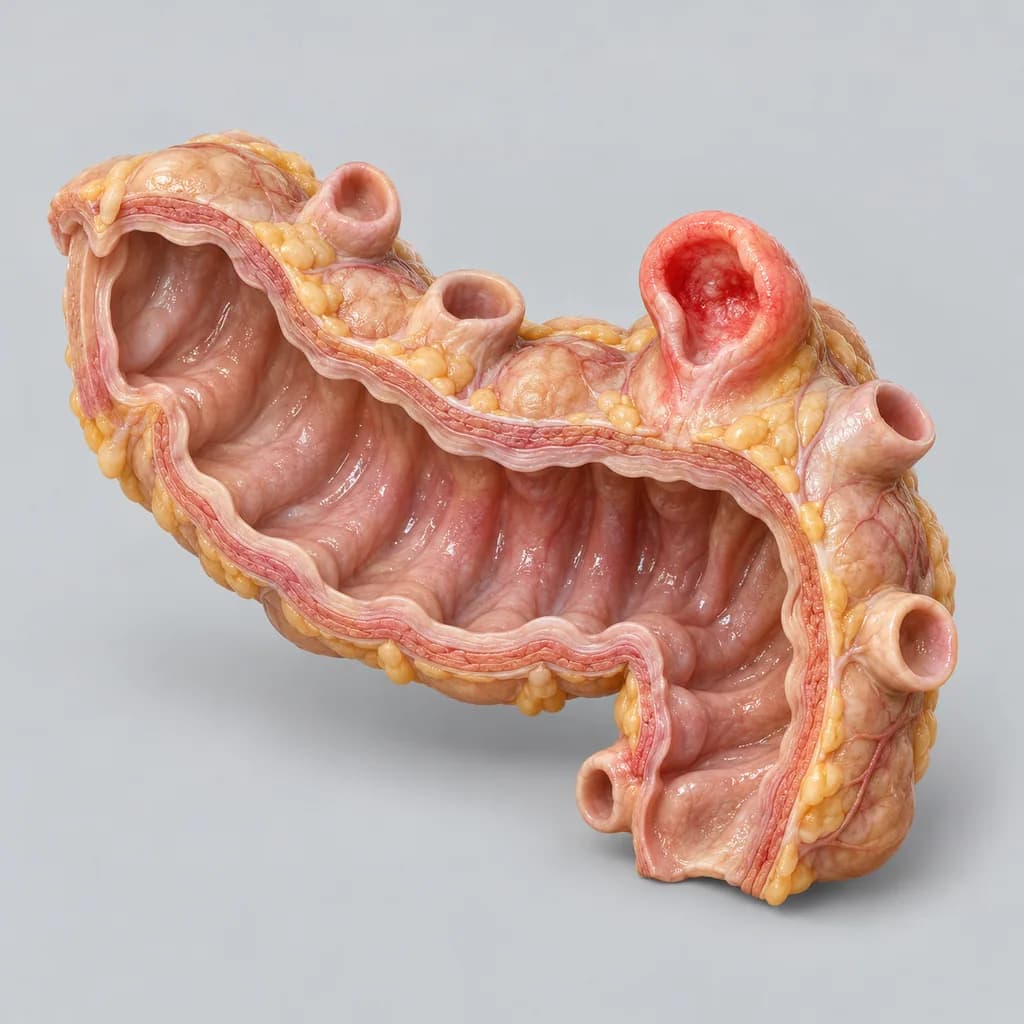
Diverticulitis is inflammation or infection of diverticula, small pouches that bulge outward from the wall of the colon. Simply having the pouches is called diverticulosis, which is common with age and usually causes no symptoms. Dr. Ihab Herraka provides diverticulitis treatment in Fort Smith, from mild flares to follow-up after a hospital stay. A CT or colonoscopy report mentioning diverticulosis has not told you that you have diverticulitis. Diverticula form most often in the sigmoid colon, low on the left, which is why the pain is usually felt there. Most attacks are mild, but some are complicated by an abscess, a perforation or a blockage.
Diverticulosis vs. diverticulitis
These two terms get used interchangeably, but they are not the same condition. Diverticulosis simply means small pouches, called diverticula, have formed in the wall of the colon. It is common with age, usually found incidentally on a colonoscopy or CT scan done for another reason, and on its own needs no treatment. Diverticulitis means one or more of those pouches has become inflamed or infected, producing pain, fever and a change in bowel habits. Most people with diverticulosis never go on to develop diverticulitis.
Symptoms
Diverticulosis usually causes none. Diverticulitis usually makes itself obvious:
- Steady pain in the lower left abdomen, building over a day or two and tender to touch
- Fever and chills
- Nausea, sometimes vomiting
- A change in bowel habits, constipation more often than diarrhea
- Bloating and loss of appetite See a doctor promptly if you have lower abdominal pain with a fever, or pain that has not improved after a day or two. Go to the emergency department for severe or rapidly worsening pain, a belly that is rigid or too tender to touch, high fever with shaking chills, vomiting that keeps you from holding down fluids, an inability to pass stool or gas, or a large amount of blood from the rectum, especially with dizziness or fainting. Diverticular bleeding is different again: sudden, painless passage of a large amount of dark red or maroon blood. Even if it stops on its own, it needs urgent evaluation. See a rectal bleeding doctor Fort Smith.
How diverticulitis is diagnosed
Appendicitis, colitis, urinary infections, gynecologic problems and occasionally colon cancer all cause lower abdominal pain and fever, so diverticulitis is confirmed, not guessed at. At our Fort Smith Main Clinic:
- History and exam. Where the pain is, how it started, prior episodes, your medications, and any past colonoscopy. Dr. Herraka examines your abdomen.
- Bloodwork. A blood count looks for signs of infection, and for anemia if you have bled.
- CT scan. A CT of the abdomen and pelvis is the standard test. It confirms the diagnosis, shows how severe the inflammation is, and finds complications such as an abscess or perforation.
- Colonoscopy, after you recover. Not during an attack, the inflamed colon is more fragile. Once things settle, usually six to eight weeks later, it is recommended if you have not had one recently, to rule out other causes including cancer, at our on-site endoscopy center.
Treatment
Treatment depends on how severe the attack is and whether there are complications: Mild, uncomplicated diverticulitis: treated at home. Most first attacks fall here. You rest the bowel with clear liquids or a low-fiber diet for a few days, then advance as the pain eases. Acetaminophen is the preferred pain reliever; ibuprofen and naproxen can raise the risk of complications and are best avoided. Antibiotics used to be automatic; guidelines from the American College of Gastroenterology now support selective use in mild cases in otherwise healthy adults, added when there are signs of a more significant infection, other health conditions that raise your risk, or symptoms that are not improving. We recheck within a few days. Hospital care. High fever, severe pain, vomiting, an abscess, or conditions that make infection riskier call for intravenous fluids, antibiotics and bowel rest in the hospital. A larger abscess is often drained with a CT-guided catheter, without an operation. Surgery. Surgery removes the affected segment of colon. It is needed for a perforation with widespread infection, a blockage, a fistula (an abnormal connection to the bladder or another organ), or an abscess that cannot be drained. After repeated attacks, elective surgery is an individual decision, not a set number of attacks; we coordinate with a surgeon. Preventing the next one. A high-fiber diet with plenty of fluid, regular activity, a healthy weight and not smoking lower the chance of another attack, and regular anti-inflammatory pain relievers are best avoided. Weight help is available in the same office through medical weight loss.
Diet during and after a flare
Diet during a flare moves in stages. Most people start with clear liquids for a day or two, move to a low-fiber diet as pain eases, then advance to a regular high-fiber diet once symptoms have fully resolved. Nuts, seeds, popcorn and corn were once restricted long-term out of concern they would lodge in a pouch and trigger a flare; that advice has been set aside, since these foods have not been shown to cause diverticulitis, and a high-fiber diet is part of what helps prevent the next attack.
Complications
Most attacks resolve without one, but diverticulitis can lead to:
- Abscess. A pocket of infection next to the inflamed segment, often drained with a needle guided by CT instead of surgery.
- Perforation. A tear through the colon wall that lets infection spread into the abdomen; this is a surgical emergency.
- Fistula. An abnormal connection that can form between the colon and the bladder, vagina or skin after repeated inflammation.
- Stricture. A narrowed, scarred segment left behind by repeated attacks that can partially block the colon over time.
- Bleeding. Diverticular bleeding is a separate complication of the pouches themselves, described above, rather than of an infected one.
Colonoscopy after diverticulitis: why and when
Pain, fever and a change in bowel habits can come from diverticulitis, but they can also come from colon cancer or inflammatory bowel disease, and a CT scan cannot always tell them apart. That is why a colonoscopy, six to eight weeks after you recover, is recommended if you have not had one recently. Waiting matters: the colon wall is more fragile during an active attack, which raises the risk of the exam itself. If you have had a colonoscopy recently, it may not need repeating.
What to expect at your visit
Tell the scheduler if you have symptoms now, and bring your medication list and any recent CT, colonoscopy or hospital records. Expect a conversation and an exam of your abdomen, then testing if diverticulitis is suspected. You leave with a written plan and clear guidance on when to go to the emergency department. After a hospital stay, Dr. Herraka reviews your imaging and arranges the follow-up colonoscopy. For most plans no referral is needed.
Cost & insurance
Office visits, bloodwork and CT scans for diverticulitis are covered by most plans when medically necessary, and a colonoscopy after an episode is billed as a diagnostic exam rather than a screening. We accept most major plans, including Medicare and both Arkansas and Oklahoma Medicaid, and the full list is on our insurance page.
Frequently asked questions
What is the difference between diverticulosis and diverticulitis?
Diverticulosis means small pouches are present in the wall of your colon. It is common with age, usually causes no symptoms, and needs no treatment. Diverticulitis means one of those pouches has become inflamed or infected, causing pain, fever and a change in bowel habits. Most people with diverticulosis never develop it.
Can I eat nuts, seeds and popcorn if I have diverticulosis?
Yes. Patients were once told to avoid nuts, seeds, corn and popcorn in case they lodged in a pouch. That advice has been set aside. These foods have not been shown to cause diverticulitis, and they supply fiber. Eat a broad, high-fiber diet unless a flare is active.
Do I need antibiotics for diverticulitis?
Not always. For mild, uncomplicated diverticulitis in otherwise healthy adults, current guidelines support bowel rest, pain control and close follow-up, with antibiotics added when there are signs of a more significant infection, other health conditions that raise your risk, or symptoms that are not improving. Complicated cases are treated in the hospital.
Why do I need a colonoscopy after diverticulitis?
Because pain, fever and a change in bowel habits can also come from colon cancer or inflammatory bowel disease, and a CT scan cannot always tell them apart. A colonoscopy six to eight weeks after you recover looks at the lining directly. If you have had one recently, it may not need repeating.
Will diverticulitis come back?
It can. Some people have one episode and never another; others have repeat attacks months or years later. Fiber, activity, a healthy weight, not smoking and avoiding regular anti-inflammatory pain relievers all lower the chance. If attacks keep returning, Dr. Herraka will talk through your options.
See a diverticulitis doctor in Fort Smith
Lower left abdominal pain with a fever is reason enough to be seen. Call the Digestive & Liver Center of Arkansas Main Clinic at (479) 242-2888 or request an appointment. Dr. Ihab Herraka sees patients at 3416 Old Greenwood Rd, Fort Smith, AR 72903, Monday through Friday, 8:00 to 5:00, including patients from Poteau, Sallisaw and across eastern Oklahoma, where Oklahoma Medicaid is accepted. See our other lower GI conditions.