

On this page
What is gastroparesis?
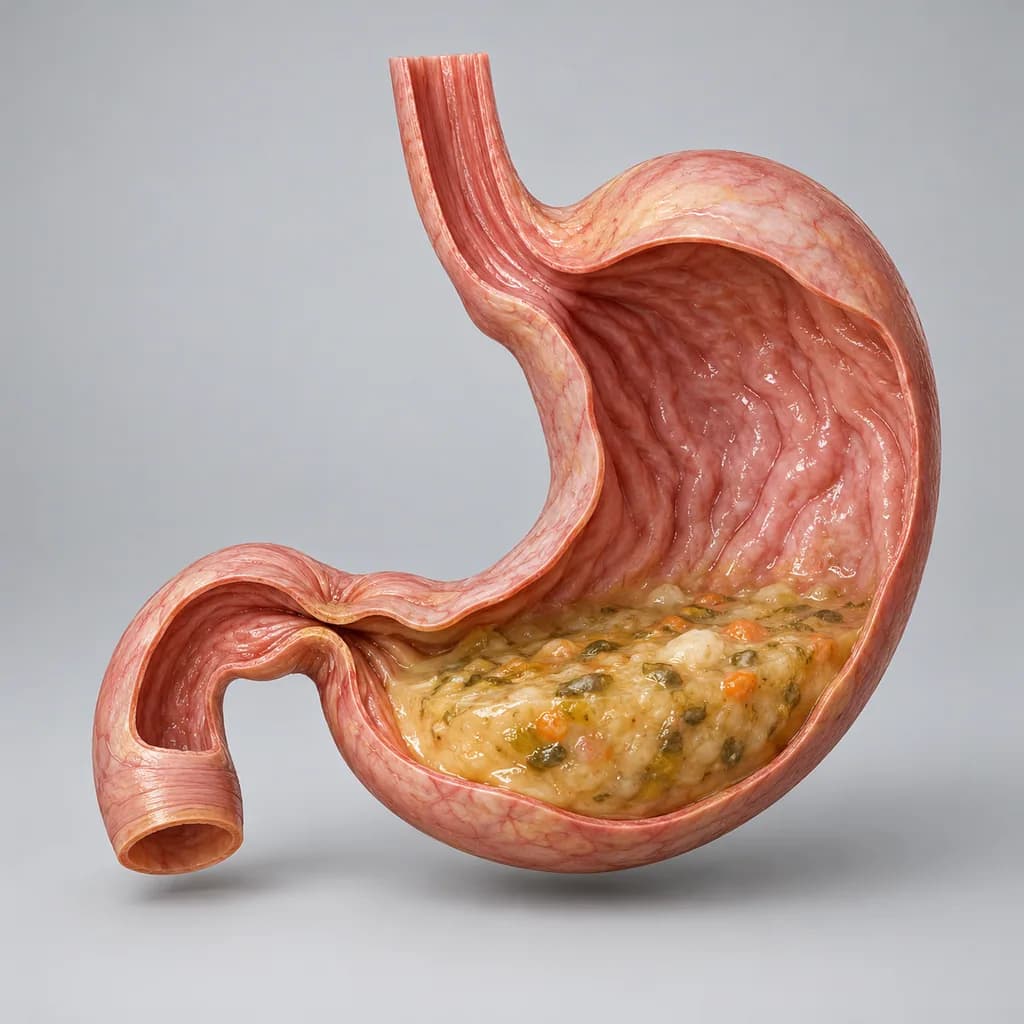
Gastroparesis means the stomach empties more slowly than it should, with no physical blockage to explain it, so food lingers and causes nausea, vomiting, early fullness and bloating. Dr. Ihab Herraka, a gastroparesis specialist in Fort Smith, diagnoses and treats it at our Main Clinic. The stomach normally moves a meal into the small intestine over a few hours; in gastroparesis that muscular work is weak or poorly timed. Diabetes is one of the most frequent causes. Others include vagus nerve injury from chest or abdominal surgery, a viral illness, and certain medications. Often no cause is found. Medications matter more here than patients expect. Opioid pain relievers, some antidepressants and bladder medicines, and GLP-1 medicines for diabetes and weight loss all slow gastric emptying, and can cause nausea, vomiting and early fullness that look exactly like gastroparesis. Drug-induced cases often improve or resolve once the medicine is stopped or adjusted, which is why a full medication review is part of every visit. Other upper GI conditions feel much the same, so bring every medicine and supplement to your visit.
Symptoms
Symptoms are usually worst after meals and build through the day.
- Nausea, and vomiting of food eaten hours earlier
- Feeling full after only a few bites
- Bloating and discomfort in the upper abdomen
- Heartburn or regurgitation
- Poor appetite and unintended weight loss
- Blood sugars that swing unpredictably, if you have diabetes See a doctor promptly if you have any of the following:
- Vomiting that keeps you from holding down liquids, or dehydration, dizziness, dry mouth, little urine
- Vomiting blood, or material that looks like coffee grounds
- Black, tarry stools
- Severe or sudden abdominal or chest pain
- Weight loss you did not intend
- Fever with vomiting
How gastroparesis is diagnosed
Diagnosis means ruling out a blockage, then measuring how fast your stomach actually empties. At the Main Clinic, that usually means:
- A history and medication review. How long symptoms have lasted, your weight, your diabetes control, prior chest or abdominal surgery, and every medicine you take.
- Targeted bloodwork. A blood count, a metabolic panel, blood sugar or HbA1c, and thyroid testing, since diabetes and an underactive thyroid both slow the stomach.
- Upper endoscopy. A blockage causes the same symptoms as a slow stomach, so it has to be excluded first. Under sedation, Dr. Herraka examines the esophagus, stomach and first part of the small intestine for an ulcer, a narrowing or retained food.
- A gastric emptying study (gastric emptying scintigraphy). We perform this at our Main Clinic: you eat a small meal containing a trace marker, and scans over about four hours measure how much is still in your stomach. Your blood sugar should be reasonably controlled that day, since a high level slows the stomach and can skew the result. A gastric emptying breath test or a wireless motility capsule are alternatives used in some cases.
Treatment
No single medicine fixes gastroparesis. Treatment is layered, in the order a specialist works through it.
- Blood sugar control. For patients with diabetes this is treatment, not a separate errand, since steadier glucose means steadier emptying.
- Meal changes. Smaller meals eaten more often, lower in fat and in tough insoluble fiber, chewed thoroughly. Liquids and blended foods empty more easily on hard days, and sitting upright after eating helps. A dietitian can build a plan around foods you will actually eat.
- A medication review. Reducing or stopping medicines that slow the stomach can change the picture on its own. If a GLP-1 medicine is contributing, that decision is made with the physician who prescribed it.
- Prescription medication. Anti-nausea medicine helps many patients. Metoclopramide, a prokinetic that helps the stomach empty, is the medicine with the most evidence behind it, but it carries an FDA boxed warning for tardive dyskinesia, a movement disorder that can be permanent and becomes more likely the longer the medicine is taken, so it is generally limited to 12 weeks of continuous treatment. Erythromycin, an antibiotic that also stimulates stomach contractions at lower doses, is another option, though its effect tends to fade over a few weeks.
- Referral when symptoms are severe. If symptoms persist despite these steps, or you cannot maintain weight and hydration, we coordinate referral to centers that offer gastric electrical stimulation (Enterra) or G-POEM, a scope-based procedure that loosens the stomach's outlet muscle.
Living with gastroparesis
Most patients manage gastroparesis long-term with diet, medication and follow-up rather than facing a single fix. Left untreated, the condition can lead to malnutrition and dehydration from poor intake, a bezoar (a mass of undigested food that can itself block the stomach), and ongoing reflux, since food that lingers in the stomach is more likely to wash back up. Because Dr. Herraka is also board-certified in obesity medicine, weight-loss medication side effects and gastroparesis are often managed by the same physician; see medical weight loss for that side of care.
What to expect at your visit
Your first appointment is mostly conversation: when the nausea comes, how long after meals, what you can keep down, your weight over the past year, and every medicine on your list. An exam follows, and bloodwork can be drawn the same day. You leave with a working diagnosis, a diet and medication plan, any testing scheduled, and a follow-up once results are back. For most plans, no referral is needed.
Cost & insurance
Office visits, upper endoscopy and gastric emptying studies are covered by most plans when medically necessary. We accept most major plans, including Medicare and both Arkansas and Oklahoma Medicaid, and the full list is on our insurance page. Our staff verifies your benefits before your visit.
Frequently asked questions
Do GLP-1 weight-loss medicines cause gastroparesis?
These medicines work partly by slowing the stomach, so nausea, vomiting and early fullness are common effects rather than a separate disease, and they often ease when the dose is adjusted. Vomiting that stops you keeping liquids down, or weight loss you did not intend, still needs to be evaluated. Tell every physician you see that you take one, including before a sedated procedure.
Can diabetes cause gastroparesis?
Yes. Over years, high blood sugar can damage the vagus nerve, which controls the stomach's muscles, and diabetes is one of the most frequent causes. It runs both directions: a stomach that empties unpredictably makes blood sugar harder to control, so the two are treated together.
What should I eat if I have gastroparesis?
Smaller meals four to six times a day, lower in fat and in tough insoluble fiber, chewed thoroughly. Liquids and smoothies empty more easily than solids on bad days. Sit upright during meals and for a while afterward, and take a short walk if you can.
Is gastroparesis painful?
It can be. Most patients feel discomfort or a bloated, pressure-like fullness in the upper abdomen rather than sharp pain, though pain does occur for some. Severe or sudden pain is not typical of gastroparesis alone and should be evaluated to rule out another cause.
Does gastroparesis affect your life expectancy?
For most patients, gastroparesis itself is not life-threatening and is managed as a chronic condition, similar to other long-term digestive problems. The more serious risks come from complications such as severe dehydration, malnutrition or aspiration if vomiting is uncontrolled, which is why symptoms that prevent you from keeping down food or fluids need prompt evaluation.
Does gastroparesis go away?
For most people it is managed rather than cured, and symptoms come in better and worse stretches. Some patients improve over time, especially when the trigger was a medicine that can be changed or an illness the stomach is recovering from. Steady blood sugar and consistent meals help.
Do I still need an endoscopy if my symptoms sound like gastroparesis?
Usually yes, at least once. An ulcer, a narrowing at the outlet of the stomach or another blockage causes the same nausea, vomiting and fullness, and those are treated very differently. An upper endoscopy rules them out and takes about 10 to 15 minutes under sedation.
Do I need a referral to see a gastroparesis doctor in Fort Smith?
Usually not. Most plans let you schedule with us directly. If yours requires a referral from your primary care provider, our staff will tell you when you call and help arrange it. Bring your medication list, and if you have diabetes, recent blood sugar readings or your latest A1c.
See a gastroparesis doctor in Fort Smith, Arkansas
Nausea, vomiting or early fullness lasting more than a few weeks is worth sorting out. Call the Digestive & Liver Center of Arkansas Main Clinic at (479) 242-2888 or request an appointment to see Dr. Ihab Herraka at 3416 Old Greenwood Rd, Fort Smith, AR 72903, Monday through Friday, 8:00 to 5:00. We care for patients from Fort Smith, Van Buren, Greenwood, Alma, Barling, Charleston and Ozark, and from Poteau, Sallisaw and eastern Oklahoma, where Oklahoma Medicaid is accepted.