

On this page
What is Barrett's esophagus?
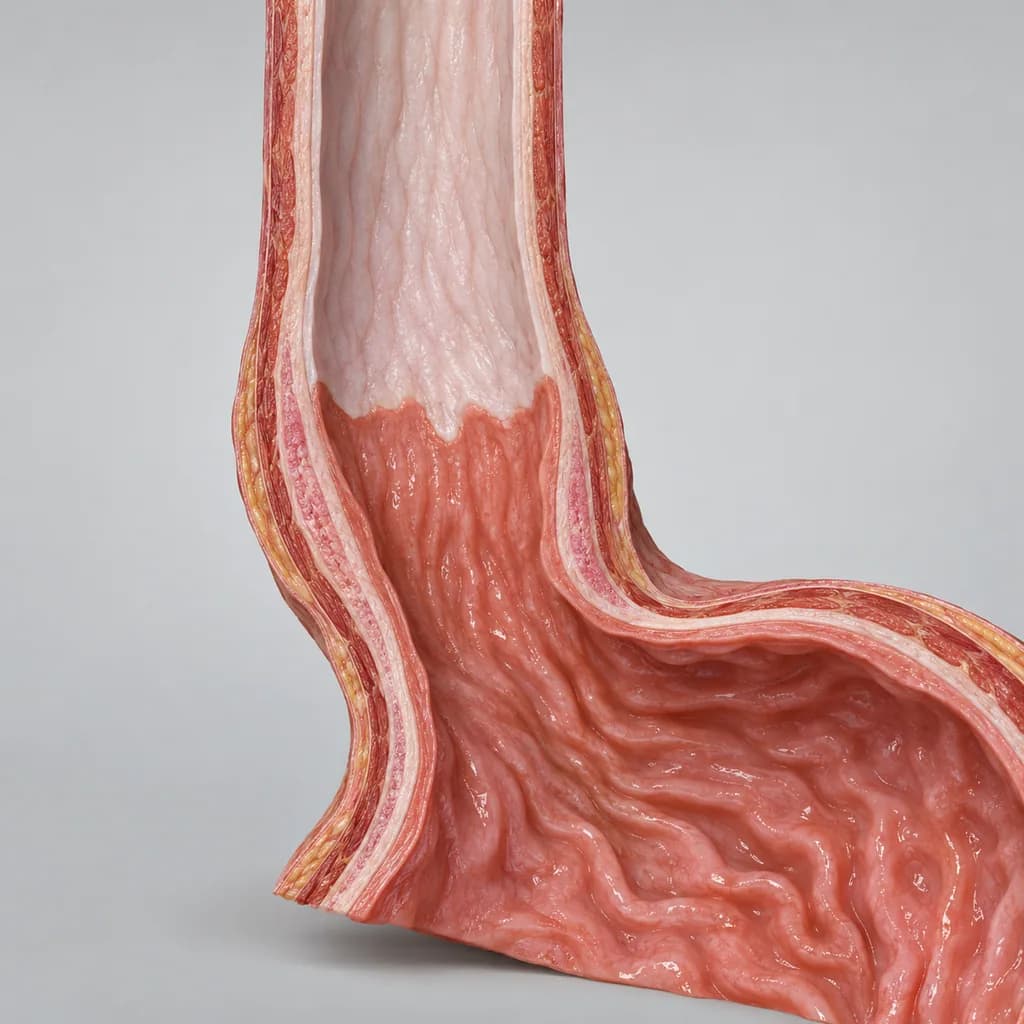
Barrett's esophagus is a change in the lining of the lower esophagus. Years of acid washing up from the stomach can prompt the normal lining to be replaced by tissue that resembles the lining of the intestine, which stands up to acid better. It is found during an upper endoscopy and confirmed on biopsy. Nothing about how you feel will tell you whether you have it. It is worth saying plainly what the diagnosis does and does not mean. Barrett's is not cancer, and the great majority of people who have it never develop esophageal cancer. What it does mean is that your esophagus is worth keeping an eye on, because the cell changes that can precede cancer are findable on biopsy, and treatable, long before they turn into it. Dr. Ihab Herraka looks after Barrett's surveillance for patients across Fort Smith and the River Valley, along with the other upper GI conditions that long-term reflux leaves behind. It is more common in people who have had frequent reflux for years, and in men, white patients, people over 50, smokers, those carrying weight around the middle, and anyone with a family history of Barrett's or esophageal cancer.
Symptoms
Barrett's causes no symptoms of its own. Whatever you feel comes from the reflux underneath it, and some people with Barrett's have little heartburn at all, which is why the diagnosis so often arrives as a surprise. Be seen promptly if food sticks on the way down, swallowing hurts, you are losing weight without trying, you are vomiting repeatedly, or bloodwork shows new anemia. None of those is a reason to wait for the surveillance exam already on your calendar; call the office and we will move it up. Go to the emergency department the same day for vomiting blood or material that looks like coffee grounds, or black, tarry stools, particularly with dizziness or a racing heart.
How Barrett's esophagus is diagnosed
Endoscopy is the only way to make the diagnosis. Barrett's tissue has a salmon-pink color that stands out from the pale lining around it, but color alone is not enough, so biopsies are taken in a systematic pattern along the affected segment and read by a pathologist. Two things in that report shape everything after it: how far the change extends up the esophagus, and whether the cells show dysplasia, meaning they have begun to look abnormal under the microscope.
- No dysplasia. The lining has changed, but the cells look orderly. This is where most patients sit.
- Indefinite for dysplasia. The cells look unsettled, often because inflammation is making them hard to read. Acid control is tightened and the biopsies repeated.
- Low-grade dysplasia. Definite but limited changes. This grade is difficult to call, so a second pathologist should confirm it before anything is decided.
- High-grade dysplasia. More marked changes, still confined to the lining. This is the grade that calls for treatment rather than watching. Screening for Barrett's in the first place is a reasonable conversation if you have had chronic reflux plus several of the risk factors above. Endoscopy is done at our on-site endoscopy center.
Treatment
Control the acid. Most patients take a daily proton pump inhibitor long term, even after the heartburn settles, because the aim is keeping acid off the changed lining, not just settling symptoms. Managing GERD well, losing extra weight, stopping smoking, avoiding late meals and raising the head of the bed all serve the same aim. Surveillance at a set interval. With no dysplasia, endoscopy is typically repeated every three to five years, the shorter end for longer segments. An indefinite result is usually rechecked in three to six months, once acid suppression has been optimized. Confirmed low-grade dysplasia is followed far more closely, often within six to twelve months when surveillance is the chosen path, and high-grade dysplasia is generally treated rather than watched at three-month intervals. These intervals follow guidelines published by the American Gastroenterological Association and the American Society for Gastrointestinal Endoscopy. Treatment when dysplasia is present. Abnormal tissue can be removed or destroyed through an endoscope, without surgery, using techniques such as radiofrequency ablation and endoscopic resection. That is a real change in practice: high-grade dysplasia was once treated by removing part of the esophagus. Endoscopic treatment is now also generally preferred over surveillance alone for confirmed low-grade dysplasia. Dr. Herraka reviews your pathology, arranges a confirmatory read where the grade is uncertain, and coordinates that care with a center that performs it. Which path fits you is decided after your evaluation, not in advance.
What to expect at your visit
Bring the endoscopy report and the pathology report, not only the summary you were handed. The length of the segment and the exact dysplasia grade drive what happens next. Bring your medication list, including anything you take over the counter for heartburn, and mention family history of esophageal cancer. Expect a conversation about how well your reflux is actually controlled, then a plan for the next exam with a date on it. If swallowing has become difficult since your endoscopy, tell the scheduler when you call.
Cost & insurance
Surveillance endoscopy is billed as a diagnostic procedure rather than preventive screening, so your deductible and coinsurance apply as they would for any medical test. We accept most of the major plans used in the region, along with Medicare and Medicaid in both Arkansas and Oklahoma; the current list is on our insurance page. Our staff verifies your benefits before the date.
Frequently asked questions
Does Barrett's esophagus mean I will get cancer?
No. Barrett's esophagus raises the risk of esophageal cancer, but the great majority of people who have it never develop it. The reason the diagnosis matters is that it identifies who benefits from periodic endoscopy, so that a change in the cells is found at a stage when it can be treated through a scope.
What are the symptoms of Barrett's esophagus?
There are none specific to it. Barrett's itself causes no symptoms, and what you notice, if anything, comes from the reflux that led to it: heartburn, regurgitation or a sour taste. Some people with Barrett's have little or no heartburn at all, which is why it is often found incidentally during an endoscopy done for another reason.
How often do I need an endoscopy if I have Barrett's?
It depends on what the biopsies showed. When there is no dysplasia, the exam is usually repeated every three to five years, sooner for a longer segment of Barrett's tissue. Low-grade dysplasia is followed much more closely or treated, and high-grade dysplasia calls for treatment rather than waiting. Your gastroenterologist sets the interval from your own pathology report.
Can Barrett's esophagus go away on its own?
Barrett's esophagus does not usually reverse on its own. Acid-reducing medication and weight loss calm the inflammation and lower the chance of further change, but they do not reliably return the lining to normal. Abnormal tissue can be removed endoscopically when dysplasia is present. No treatment can promise the change will reverse, which is why surveillance continues either way.
Do I still need my acid medicine if the heartburn stopped?
Most patients with Barrett's stay on a daily proton pump inhibitor even when symptoms are gone, because the medication is there to keep acid off the changed lining, not to treat the burning. Reflux without symptoms is common in Barrett's, so feeling fine is not evidence that acid exposure has stopped. Do not stop or change the dose without discussing it first.
What does low-grade dysplasia mean on my pathology report?
Low-grade dysplasia means the cells in the Barrett's segment show definite but limited abnormal changes. It is the hardest grade for pathologists to agree on, so a second expert review is recommended before any decision is made. If the grade is confirmed, the options are endoscopic treatment of the abnormal tissue or close surveillance, and the choice depends on your age, your health and what you want.
See a Barrett's esophagus specialist in Fort Smith
A diagnosis you do not understand is harder to live with than the condition itself. Call the Digestive & Liver Center of Arkansas Main Clinic at (479) 242-2888 or request an appointment, and bring your reports. Dr. Ihab Herraka sees patients at 3416 Old Greenwood Rd, Fort Smith, AR 72903, Monday through Friday, 8:00 to 5:00, including patients from Poteau, Sallisaw and across eastern Oklahoma.