

On this page
What is dysphagia?
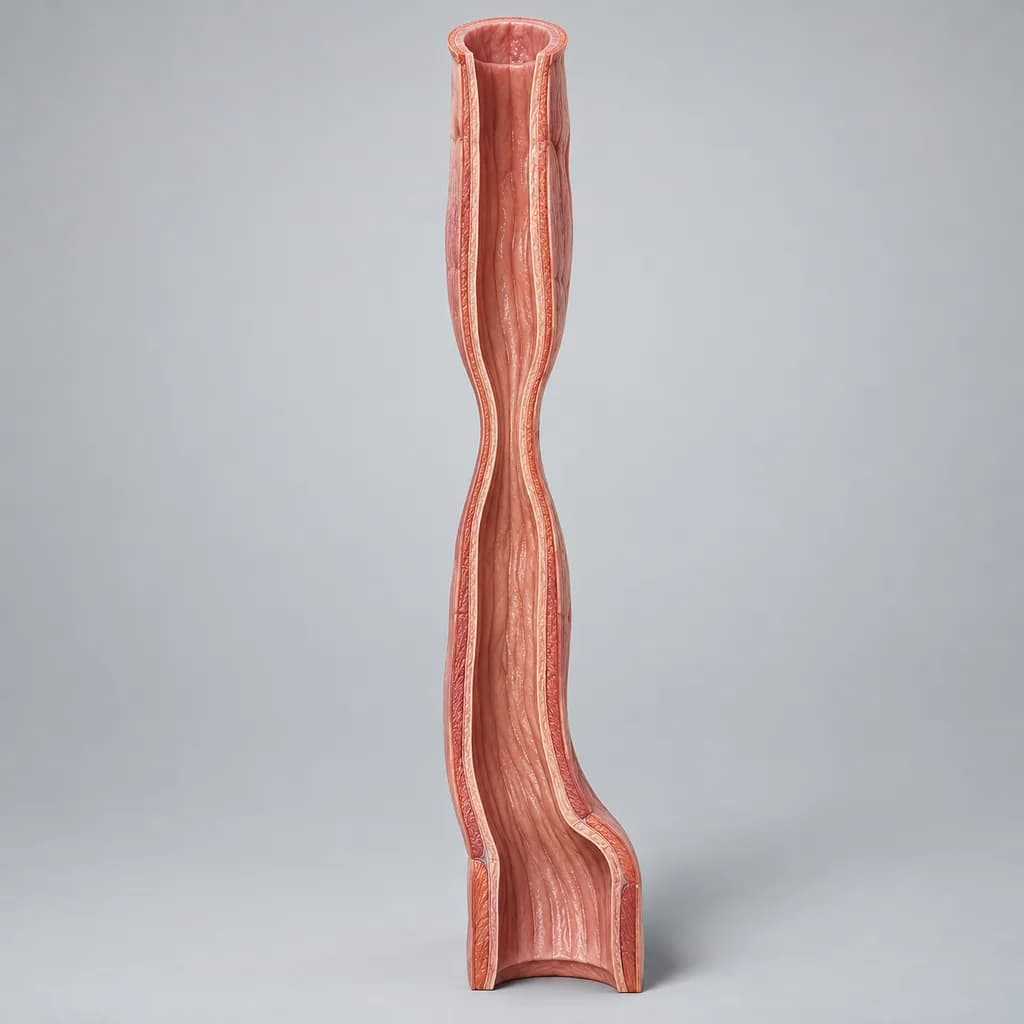
Dysphagia is the medical word for difficulty swallowing. It covers everything from a bite of chicken that hangs up behind the breastbone to coughing on a sip of water, and it always has a cause worth finding. Dr. Ihab Herraka evaluates difficulty swallowing at our Fort Smith Main Clinic, alongside the other upper GI conditions it can point to. Swallowing trouble comes in two shapes, and separating them is the first thing your visit does. Trouble starting a swallow happens in the mouth and throat. The swallow will not launch, drink goes down the wrong way, you cough at the first attempt, or your voice sounds wet afterward. The causes are usually nerve or muscle related, including stroke and Parkinson's disease. Food sticking after you swallow happens in the esophagus. The swallow is normal, then a few seconds later the food stops in the chest and you wait it out, drink water, or bring it back up. This is the pattern gastroenterology treats. New or worsening difficulty swallowing is not a normal part of aging, and it is not something to work around with softer food.
Symptoms
- A feeling that food stops or hangs up behind the breastbone
- Needing water to wash bites down, or eating much more slowly than you used to
- Coughing, choking, or a wet-sounding voice during meals
- Pain when you swallow
- Bringing food back up undigested, sometimes hours later
- Losing weight because eating has become work See a doctor promptly if swallowing has become harder over recent weeks, if solid food is sticking, if you are losing weight, or if swallowing trouble has arrived on top of years of heartburn. Go to the emergency department if food is stuck and will not pass, if you cannot swallow your own saliva, or if you vomit blood or material that looks like coffee grounds. Chest pain with sweating or shortness of breath is treated as a possible heart problem first, so call 911.
How difficulty swallowing is diagnosed
What you describe narrows the list quickly: solids alone or solids and liquids together, steadily worse or coming and going, and whether reflux has been part of your history. From there:
- Upper endoscopy. Usually the first test when food is sticking. A thin scope examines the esophagus under sedation, takes tissue samples, and can treat a narrowing in the same appointment, at our on-site endoscopy center.
- Biopsies even when the lining looks normal. This part of the guidance changed. Adults with unexplained trouble swallowing now have samples taken routinely, because eosinophilic esophagitis, an allergic inflammation of the esophagus, often leaves a lining that looks close to normal.
- Barium swallow. An X-ray taken while you swallow, useful for rings, pouches and the shape of a narrowing.
- A swallow study with a speech-language pathologist. The right test when the problem is starting the swallow. We do not perform it here; we arrange it with Mercy Speech Pathology.
- Esophageal manometry. A pressure study for when the endoscopy is clear and the muscle itself is the suspect. We arrange it by referral rather than perform it here, and it is the test that identifies achalasia.
Treatment
Treatment follows the cause, which is why the evaluation comes first. A narrowing, ring or web. Years of reflux can scar the lower esophagus into a stricture, and a thin band of tissue near the stomach can let liquids by while stopping meat or bread. Both are usually stretched gently with balloon dilation during your endoscopy, which we do here in our own endoscopy center, with acid controlled long term, since a narrowing tends to return if the reflux does not change. See GERD and acid reflux. The same endoscopy is how Barrett's esophagus is found. Eosinophilic esophagitis. Managed with acid-reducing medication, targeted diet changes, swallowed topical steroid preparations, and dilation when the esophagus has narrowed. Dupilumab, an injectable biologic medication, is a newer option for patients who do not respond well to those first-line approaches. The options have expanded in recent years, and which one fits you is decided once biopsies confirm it. Trouble starting a swallow. Swallow therapy, changes in food and liquid texture, and treatment of the underlying condition, led by a speech-language pathologist. We coordinate that referral. A growth in the esophagus. Uncommon, but it is the reason difficulty swallowing is not left to see whether it settles. Endoscopy with biopsy answers the question.
Why untreated dysphagia matters
Trouble swallowing that is left alone does not just stay inconvenient. Food or liquid that goes down the wrong way can be inhaled into the lungs, called aspiration, which can lead to pneumonia. Eating less to avoid the discomfort leads to unintended weight loss and malnutrition over time. These are the reasons dysphagia is treated as a symptom that always needs an answer rather than something to manage around with softer food or smaller bites.
What to expect at your visit
Tell the scheduler if food is currently sticking, and bring your medication list and any reports from a previous endoscopy or barium study. Expect a conversation and an exam first, then testing if the pattern calls for it. You leave with a written plan and clear guidance on when to go to the emergency department. For most plans no referral is needed.
Cost & insurance
Office visits, swallow studies and endoscopy for difficulty swallowing are billed under your regular medical benefits rather than as preventive care, so your deductible and copay apply as usual. Most major plans are accepted here, along with Medicare and Medicaid on both sides of the state line; the current list is on our insurance page.
Frequently asked questions
Why does food feel stuck in my chest?
Food that stops behind the breastbone a few seconds after a normal swallow usually means something is slowing it inside the esophagus. Common reasons are a narrowing from long-term acid reflux, a ring of tissue near the stomach, allergic inflammation, or a muscle that is not moving food along. An upper endoscopy is generally the test that tells them apart.
Is trouble swallowing serious?
Difficulty swallowing can be serious, which is why it is evaluated rather than watched. Most causes are treatable, but trouble swallowing is also one of the few symptoms that can signal a growth in the esophagus. Swallowing that is getting steadily harder, sticking with solid food, or coming with weight loss should be seen promptly.
What test is done first for difficulty swallowing?
For food that sticks after you swallow, an upper endoscopy is usually first, because it looks at the lining directly, allows biopsies, and can open a narrowing with balloon dilation during the same sedation, which we perform here. When the problem is starting the swallow instead, a swallow study with a speech-language pathologist is often the better first test.
How is dysphagia diagnosed?
It starts with a detailed history of what happens when you swallow, since solids alone versus solids and liquids together points toward different causes. From there, an upper endoscopy is usually the first test for food sticking after a normal swallow, sometimes with a barium swallow X-ray or esophageal manometry, while a swallow study with a speech-language pathologist is used when the swallow itself will not start.
What are the complications of not treating dysphagia?
Food or liquid can be inhaled into the lungs, leading to aspiration pneumonia, and eating less to avoid discomfort can cause unintended weight loss and malnutrition. These risks are why new or worsening trouble swallowing should be evaluated rather than managed around.
Can acid reflux cause difficulty swallowing?
Yes. Reflux can inflame the lower esophagus, and over years it can scar it into a narrowing that catches solid food. Swallowing trouble in someone with a long history of heartburn is a reason to be examined rather than a reason to increase the antacid.
What should I do if food is stuck right now?
If food is lodged in your esophagus right now, stop eating and drinking, including water, and do not try to force it down or use home remedies such as meat tenderizer. Call the office during clinic hours, or go to the emergency department otherwise, because a food impaction is cleared with an endoscopy rather than waited out. Go straight to the emergency department if you cannot swallow your own saliva, are drooling, are having trouble breathing, or are in significant chest pain.
See a swallowing specialist in Fort Smith
Trouble swallowing deserves an answer, not a workaround. Call the Digestive & Liver Center of Arkansas Main Clinic at (479) 242-2888 or request an appointment. Dr. Ihab Herraka sees patients at 3416 Old Greenwood Rd, Fort Smith, AR 72903, Monday through Friday, 8:00 to 5:00, including patients from Poteau, Sallisaw and across eastern Oklahoma.