

On this page
What is a capsule endoscopy?
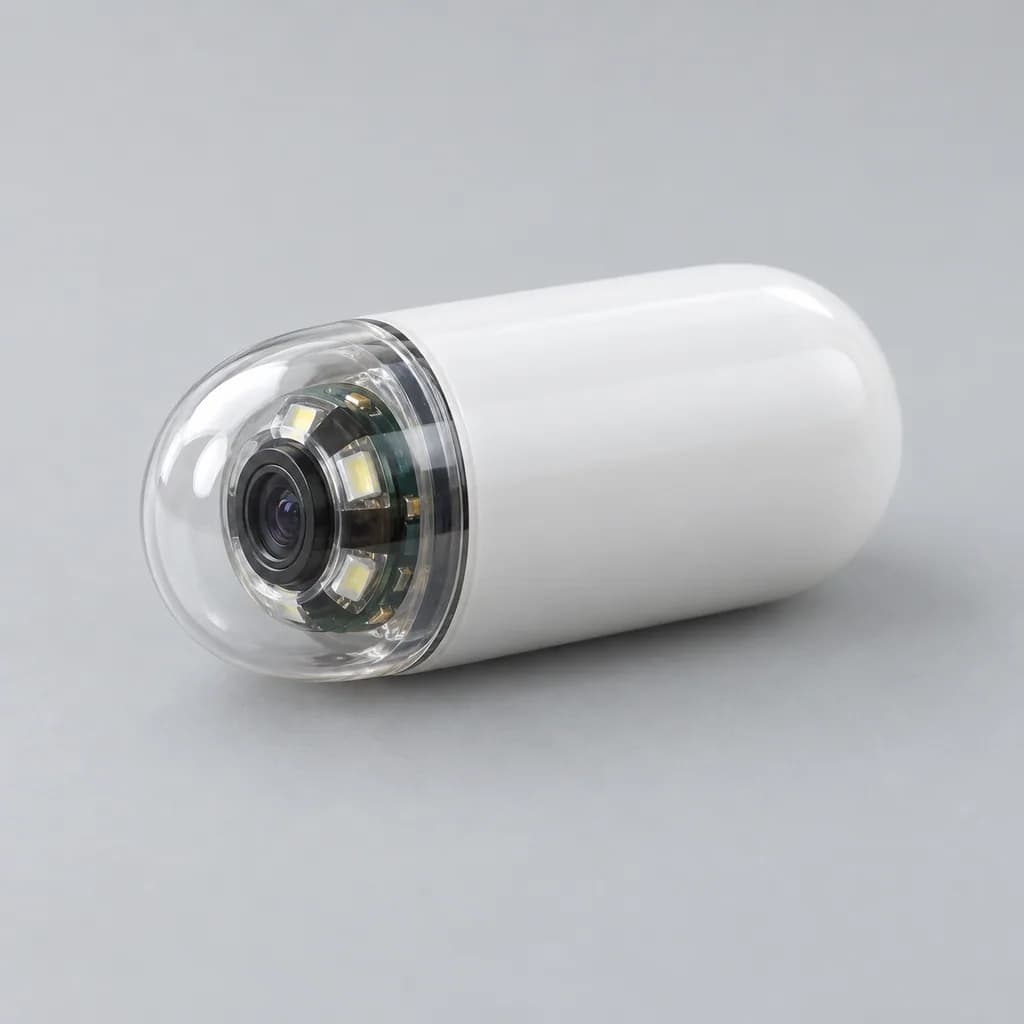
A capsule endoscopy is a camera the size of a large vitamin that you swallow with a sip of water. Over the next eight hours it travels the length of your small intestine on its own, taking tens of thousands of photographs, while a recorder worn on a belt collects the images. You go about a normal day. The capsule passes in a bowel movement and is not retrieved. It answers a question the two common scopes cannot. A colonoscopy examines the colon from below. An upper endoscopy reaches the stomach and the first stretch of small intestine from above. Between them lies roughly twenty feet of small intestine that neither scope can see, and that stretch is exactly where some bleeding, inflammation and rarer lesions hide. Capsule endoscopy is performed at Digestive & Liver Center of Arkansas in Fort Smith, so it is not a test you need to travel to Little Rock or Fayetteville for.
Who needs a capsule endoscopy?
Dr. Herraka usually recommends one in a small number of specific situations. Bleeding no one can find. You are anemic, or your stool has tested positive for blood, and both a colonoscopy and an upper endoscopy came back clean. This is the most common reason. The small intestine is the remaining place to look. Iron deficiency anemia without an obvious cause. Particularly when iron supplements alone have not fixed it and the usual sources of blood loss have been ruled out. Suspected Crohn's disease in the small bowel. Crohn's can affect any part of the digestive tract, and small-bowel involvement can be missed by scopes that never reach it. A capsule can show the inflammation directly. Celiac disease that is not behaving as expected. When celiac disease has been diagnosed but symptoms persist despite a strict gluten-free diet, a capsule can look for complications further down. Suspected small-bowel tumors or polyps, including surveillance in inherited polyp syndromes.
The one thing that has to be ruled out first
A capsule has to be able to pass. If there is a stricture, a tight narrowing anywhere in the digestive tract, the capsule can lodge above it. This is uncommon, but it is the reason this test is not ordered casually. Tell Dr. Herraka before your capsule if you have had bowel obstruction, abdominal or pelvic radiation, prior bowel surgery, or known Crohn's with narrowing. Depending on your history he may order imaging first, or use a dissolvable patency capsule that confirms the path is clear before the real one is swallowed. If a capsule does become stuck, it often causes no symptoms at all and is removed during a scope or, rarely, surgically. Cramping abdominal pain, vomiting or bloating in the days after your test is the sign to call us.
How to prepare
Preparation is lighter than a colonoscopy but it is not nothing, because the camera can only photograph what is not covered.
- Clear liquids only from the afternoon before, and nothing at all after midnight.
- A bowel prep is often prescribed, smaller than a colonoscopy prep, to clear the view.
- Hold iron supplements for several days beforehand, since iron darkens the intestinal lining.
- Ask about medicines that slow the gut, including some pain medicines, and about timing your other prescriptions. You will get written instructions specific to you. Follow those rather than a general list, because the prep changes with your history.
Your day, step by step
Morning, at our clinic. Sensors and a recorder are fitted, usually as a belt or a light harness. You swallow the capsule with water. The visit itself takes under half an hour. During the day. You leave and carry on. Most people go to work. You can usually drink clear liquids after two hours and eat a light meal after four, but follow the timing you are given. Avoid strenuous exercise, bending repeatedly and MRI scanners while wearing the recorder. Evening. You return the equipment, or remove it at home if you were shown how. The images are uploaded and processed. Afterwards. The capsule passes naturally, usually within a day or two. You do not need to find it or return it. If you have not seen it and you feel unwell, call us.
How your results are explained
The recorder holds many hours of footage, and the software assembles it into a reviewable study. Dr. Herraka reads it himself rather than sending it out, and you get a plain-language explanation of what was seen and what it means for your treatment. Results typically take a few days rather than being available the same afternoon. Reading a capsule study carefully takes time, and a rushed read is how a small lesion gets missed.
Cost & insurance
Capsule endoscopy is billed under your regular medical benefits, so your deductible and copay apply. Most plans cover it when it is ordered for an accepted reason, such as bleeding that a colonoscopy and upper endoscopy did not explain, but many require prior authorization first. Our staff verifies your benefits before your appointment and files the authorization, so you know what your plan has agreed to before you swallow anything. We accept most major plans, including Medicare and both Arkansas and Oklahoma Medicaid. The full list is on our insurance page.
Frequently asked questions
Is swallowing the capsule difficult?
For most people it is no harder than taking a large vitamin, and it is swallowed with water. If you have trouble swallowing pills or a known swallowing problem, tell us beforehand. The capsule can be placed directly with an endoscope instead.
Does it hurt?
No. There is no sedation, no needle and no discomfort from the capsule itself. Most people forget it is there.
Can I go to work that day?
Usually yes. You are wearing a recorder under your clothes and going about a normal day. Avoid heavy exercise and anything that involves bending over repeatedly.
Do I have to retrieve the capsule?
No. It passes in a bowel movement and is disposable. You do not need to look for it or bring it back.
What if the capsule gets stuck?
This is uncommon, and it is why your history is reviewed carefully first and why a patency capsule is sometimes used. If it happens it often causes no symptoms and is retrieved during a scope. Call us if you have cramping pain, vomiting or bloating after the test.
Can I have an MRI while wearing it?
No. Do not have an MRI while the capsule and recorder are in place. Tell any other doctor treating you that day that you are wearing one.
Does this replace a colonoscopy?
No. They look at different organs. A capsule photographs the small intestine; a colonoscopy examines the colon and is the only one of the two that can remove a polyp. Most people who have a capsule have already had a colonoscopy.
See the part other scopes cannot reach
If you have been told your bleeding or anemia has no explanation after a normal colonoscopy and upper endoscopy, the small intestine is the next place to look, and it can be looked at here in Fort Smith. Call (479) 242-2888 to discuss whether a capsule endoscopy is the right next step. No referral is needed.